
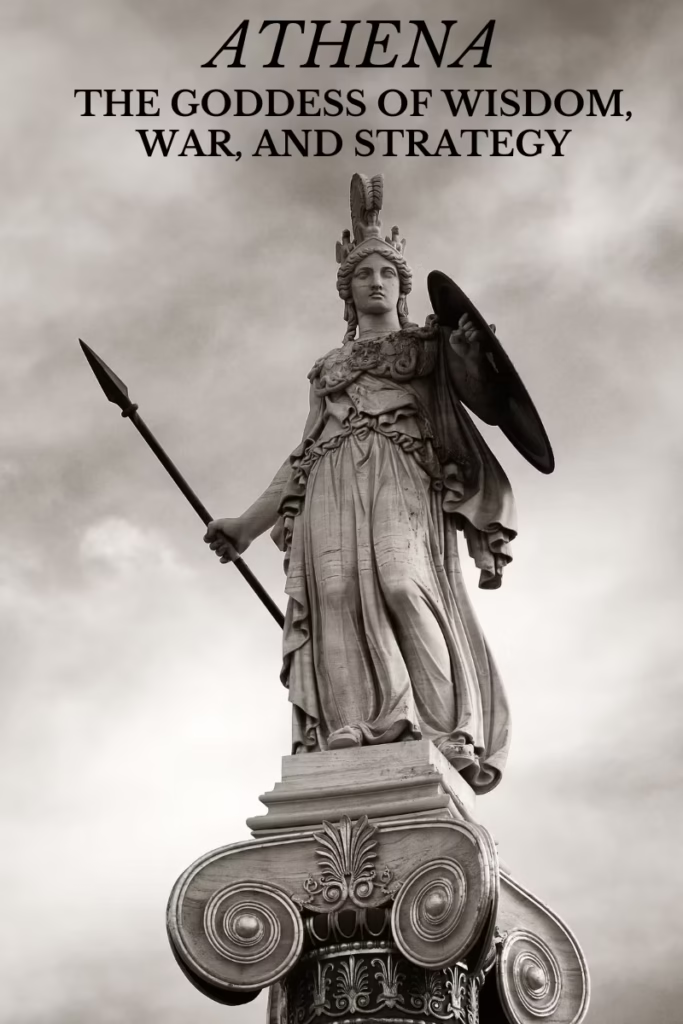
In the pantheon of Greek mythology, Athena stands as one of the most influential and complex goddesses. As the deity of wisdom, war, strategy, crafts, and civilization, Athena bridges the realms of intellect and strength, reason and resolve. Her worship extended far beyond Athens, influencing spiritual practices, art, politics, and philosophy for centuries. In this post, we will explore Athena’s origins, symbols, sacred animals and plants, mythology, and modern relevance—and how seekers today can honor and connect with her powerful energy.
The Birth of a Goddess
Athena’s mythic birth is one of the most dramatic in all of Greek mythology. She was born fully grown and clad in gleaming armor from the forehead of Zeus, the king of the gods. This miraculous event occurred after Zeus swallowed her mother, Metis, the goddess of wisdom, to prevent a prophecy that their child would be more powerful than he.
Instead of escaping this fate, Zeus absorbed Metis’s wisdom, and Athena emerged as a fusion of strength and intellect. This origin story defines her essence: not born from a womb, but from thought itself. She is wisdom made manifest—decisive, strategic, and divine.
Sacred Numbers, Colors, and Symbols
Athena is often associated with the numbers 3 and 7, both of which hold mystical significance. Three represents unity (mind, body, spirit), and seven symbolizes spiritual insight, knowledge, and mystery.
Her sacred color is red, reflecting her warlike aspect, courage, and vitality. Red also ties her to the hearth and sacred flame of wisdom—an inner fire that illuminates the path of those who seek clarity and truth.
Among her most important symbols are:
- The owl, a timeless symbol of wisdom and foresight
- The Aegis, a shield often bearing the head of Medusa, which she wields to protect and intimidate
- The spear and helmet, tools of a warrior
- The olive branch, denoting peace, prosperity, and her gift to Athens
Trees, Birds, and Animals Sacred to Athena
Athena’s deep connection to nature is reflected in her association with a diverse range of trees, birds, and animals, each representing different facets of her divine power.
Sacred Trees:
- Olive Tree – Peace, sustenance, and resilience
- Oak Tree – Strength, protection, and divine authority
- Willow – Intuition, emotion, and lunar energy
- Pear Tree – Fertility, nurturing, and sweetness
- Pomegranate Tree – Life, death, rebirth, and the mysteries of the underworld
Birds Sacred to Athena:
- Owl – Wisdom, alertness, mystery
- Vulture – Cleansing and transformation through death
- Sea Eagle – Sovereignty and higher vision
- Swallow – Communication, rebirth, and safe passage
- Dove – Peace and divine connection
- Carrion Crow – Prophecy, intelligence, and battlefield insight
Animals Associated with Athena:
- Snake – Wisdom, healing, and transformation
- Spider – Craft, destiny, and the weaving of fate
- Wolf – Loyalty, guardianship, and strategy
- Dog – Protection, guidance, and loyalty
- Horse – Power, freedom, and movement
- Lion – Courage, sovereignty, and nobility
- Goat – Vitality and resilience
- Sheep – Nurturing and innocence
- Griffin – Divine guardianship and spiritual power
- Sphinx – Mystery, riddles, and sacred knowledge
Each of these beings embodies different roles Athena may take on—whether as fierce protector, wise counselor, or divine tactician.
Athena the Strategist and Protector
Unlike Ares, who personifies the chaotic and bloody side of war, Athena represents warfare’s strategic and ethical aspects. She champions defensive warfare, battles fought for justice, and the cunning necessary to navigate conflict intelligently.
One of Athena’s most famous roles is as the divine guide to heroes. She mentors Odysseus in The Odyssey, helping him overcome countless obstacles with cleverness rather than brute force; she aids Perseus in slaying Medusa by gifting him a reflective shield and wise guidance; she even assists Heracles, Jason, and Diomedes, making her one of the most involved and influential deities in heroic myths. Athena’s presence in myth reminds us that true power is not found in violence, but in strategy, foresight, and restraint.
Patron Goddess of Athens
Athena’s name is forever intertwined with Athens, the city she won through a contest with Poseidon. When the people were asked to choose between the gifts of the gods, Poseidon struck the ground and produced a salt spring (or a horse in some versions), while Athena planted the olive tree. The Athenians chose the olive tree—a symbol of peace, nourishment, and prosperity—and named their city in her honor.
To this day, the olive tree remains a core symbol of Athena’s blessings. The Parthenon, built on the Athenian Acropolis, was dedicated to her and housed a massive statue of Athena Parthenos created by the sculptor Phidias. This temple became a center of religion, politics, and learning for centuries.
Moral Lessons and Myths
Many myths involving Athena include lessons about hubris, justice, and the consequences of defying divine order.
In the story of Arachne, a mortal woman boasts that her weaving skills surpass even those of Athena. Offended, Athena challenges her to a weaving contest. Though Arachne’s tapestry is flawless, it insults the gods by exposing their misdeeds. As punishment, Athena transforms her into a spider, cursed to weave forever—a powerful reminder to remain humble and respectful of the divine.
In The Oresteia, Athena ends a cycle of blood vengeance by establishing the first court of law. This act represents the transition from primal retribution to reasoned justice, solidifying her as a goddess of civilization and lawful order.
Worship and Offerings
Ancient Greeks honored Athena with festivals, prayers, and offerings. Her most important festival was the Panathenaia, which included parades, musical competitions, sacrifices, and the presentation of a woven robe (peplos) to her statue.
Traditional offerings to Athena include:
- Olive oil
- Red candles
- Spindles or woven crafts
- Feathers from her sacred birds
- Small shields, swords, or owl statues
Modern practitioners often create altars for Athena that reflect her dual nature: symbols of battle and strategy paired with those of wisdom and domestic arts.
Athena in Modern Spiritual Practice
Athena remains an important figure in modern Paganism, Hellenic polytheism, and goddess spirituality. Many turn to her during times of difficult decision-making, academic or legal challenges, and personal transformation.
She is particularly resonant for:
- Students and scholars seeking knowledge
- Activists and leaders pursuing justice
- Writers, artists, and weavers honoring their craft
- Anyone balancing strength with wisdom
To connect with Athena today, try the following practices:
- Meditation: Visualize Athena in armor, accompanied by her owl, offering insight or guidance
- Journaling: Write questions to her and allow intuitive answers to flow
- Craftsmanship: Engage in a creative or intellectual activity in her honor
- Sacred space: Build an altar using her colors, symbols, and natural elements like olive branches or red stones (such as garnet or carnelian)
Final Reflections of Athena Goddess
Athena stands as a radiant symbol of how wisdom and strength can coexist. She does not conquer through destruction, but through clarity, reason, and ethical action. Her legends teach us the value of preparation, foresight, and restraint. In a chaotic world, her presence is one of balance—urging us to speak with wisdom, act with courage, and lead with integrity.
Whether you are embarking on a new journey, seeking protection, or trying to solve a complex problem, Athena’s energy is one of empowerment. She calls us to rise with intelligence, to lead with justice, and to honor the crafts and skills that shape civilization. The red-cloaked goddess with the owl’s eyes and the warrior’s heart continues to walk beside those who dare to think deeply, act bravely, and live honorably.