
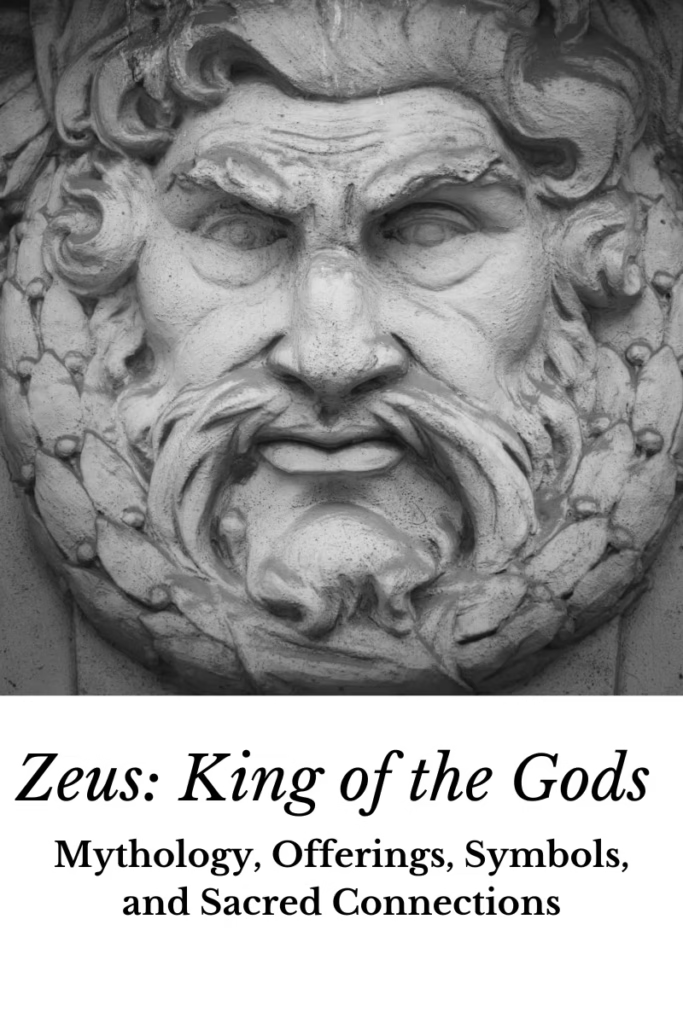
Zeus, the mighty King of the Olympian gods, stands as one of the most powerful and enduring deities in ancient Greek mythology. Known for his thunderbolts, his commanding presence, and his rule over the sky and weather, Zeus was revered not only as the ruler of Mount Olympus but as a divine force of justice, order, and fate. From the heights of myth to the humble home altars of worshippers, his presence can still be felt by those who seek connection with the divine forces of nature, leadership, and cosmic authority.
In this blog post, we’ll dive deep into Zeus’s mythological history, his sacred colors, animals, offerings, trees, and his days of the week. Whether you’re a practicing devotee, a mythology enthusiast, or simply curious about the Greek pantheon, this comprehensive guide offers a rich look into all things Zeus.
The Mythological History
Zeus is the youngest child of the Titans Cronus and Rhea. According to myth, Cronus feared that one of his children would overthrow him, so he swallowed each one at birth. Rhea, desperate to save her youngest, tricked Cronus by giving him a stone wrapped in swaddling clothes and hid Zeus in a cave on the island of Crete. There, he was raised in secret, some legends say by a goat named Amalthea and guarded by the Kouretes, armored dancers who drowned out his cries with the clashing of their weapons.
When he came of age, Zeus returned to overthrow Cronus and forced him to disgorge his siblings: Hestia, Demeter, Hera, Hades, and Poseidon. Together, they waged war against the Titans, a legendary conflict known as the Titanomachy. Zeus emerged victorious, banishing the Titans to Tartarus and assuming his place as king of the gods.
From his throne on Mount Olympus, Zeus ruled over gods and mortals alike. He upheld law, justice, and moral order and wielded thunder and lightning as his weapons. He is often depicted holding a thunderbolt, with an eagle at his side and a regal bearing that exudes both wisdom and power.
Zeus’s Domains and Divine Attributes
Zeus’s primary domain is the sky and weather, particularly storms and thunder. However, his influence goes far beyond the clouds. He is the god of:
- Justice and law
- Hospitality and oaths
- Kingship and leadership
- Fate and destiny
- Protection of cities and homes
Zeus was not only a sky god but a god of cosmic balance. In many ways, he functioned as a divine judge, overseeing the moral behavior of both gods and humans. His will was often interpreted through oracles and signs from the sky.
Colors Associated with Zeus
Colors play an important role in spiritual symbolism and ritual, and for Zeus, certain shades align naturally with his dominion and character.
1. White
White symbolizes purity, divinity, and the sky. It evokes clouds, lightning, and the celestial realm Zeus rules over. White candles and garments are often used when invoking his presence.
2. Gold
Gold represents kingship, power, and radiance. Zeus is the sovereign of the Olympians, and gold honors his majestic and exalted status.
3. Blue
Blue connects Zeus to the heavens and the expansive sky. It also reflects wisdom, calm authority, and divine protection.
4. Purple
This color symbolizes nobility and divine rulership. It emphasizes Zeus’s role as a regal and commanding deity.
In ritual or devotional settings, incorporating these colors through candles, clothing, altar cloths, and offerings can help align you with his energy.
Sacred Animals
Several animals are closely associated with Zeus, each symbolizing a different aspect of his divine power.
1. Eagle
The eagle is the most iconic animal of Zeus. It represents vision, authority, and the divine messenger between heaven and earth. Zeus is often depicted with an eagle perched beside him or soaring through the sky.
2. Bull
The bull symbolizes strength, virility, and power. In many myths, Zeus transforms into a bull—most famously when he abducts Europa in the form of a white bull.
3. Swan
Though less commonly linked to Zeus directly, the swan appears in myths where he takes on this form, such as in the tale of Leda and the Swan. It represents grace cloaking divine power.
4. Wolf
In certain local cults and legends, Zeus had a more primal and stormy nature and was associated with wolves, particularly in his arcane form, Zeus Lykaios (“Wolf-Zeus”).
Sacred Tree
Zeus is strongly associated with the oak tree, a symbol of strength, endurance, and divine authority. In ancient Greece, the oak was considered the most sacred of all trees.
The oracle of Dodona, one of the oldest oracles in Greece, was located in an oak grove where priests interpreted the rustling of oak leaves as messages from Zeus. The oak represents unshakable stability and divine wisdom—qualities that perfectly mirror Zeus’s role as cosmic ruler.
If you’re creating a space to honor Zeus, including oak branches, acorns, or carvings from oak wood on your altar can be powerful.
Offerings for Zeus
Ancient Greeks made many offerings to Zeus to win his favor, seek guidance, or give thanks. Today, modern practitioners can draw inspiration from these traditional offerings:
Common Offerings:
- Incense – Frankincense, myrrh, and copal are all fitting, as they rise to the heavens and symbolize divine communication.
- Wine – A libation of wine honors his status as a father of gods and mankind.
- Bread or cakes – Especially those made with honey and olive oil.
- Olives and olive oil – Sacred to many Greek gods, olive offerings are always appropriate.
- Fruits – Grapes, figs, and apples are excellent natural offerings.
- Candles or lamps – White, gold, or blue candles are ideal for lighting in his name.
When giving offerings, always do so with reverence. Speak to him aloud, thank him for his presence, and express your intentions clearly.
Days of the Week and Astrological Correspondences
Although Zeus doesn’t have a direct day of the week associated with him in the same way Roman deities do, we can draw parallels between him and Thursday.
Thursday: The Day of Zeus
Thursday is named after Thor, the Norse god of thunder, who shares many qualities with Zeus. In Latin, Thursday is “dies Iovis,” or “Day of Jupiter”—Jupiter being the Roman equivalent of Zeus.
This makes Thursday the best day for invoking or honoring Zeus, especially for matters related to:
- Leadership and power
- Legal or moral concerns
- Seeking justice
- Petitioning for protection
- Prayers for insight or divine favor
Astrologically, Zeus corresponds to Jupiter, the planet of expansion, abundance, wisdom, and spiritual authority. If you’re working with planetary magic, align rituals for him with Jupiter’s transits and influences.
Temples and Worship
Zeus was worshipped widely throughout the ancient Greek world, and some of his most famous temples were:
- Olympia – Home of the Temple of Zeus, where the Olympic Games were held in his honor. A massive gold and ivory statue of Zeus once stood here, considered one of the Seven Wonders of the Ancient World.
- Dodona – The site of the ancient oracle in the oak grove.
- Athens – The Temple of Olympian Zeus, or Olympieion, took over 600 years to complete and was one of the largest temples in the ancient world.
Public festivals like the Olympic Games, sacrifices, and athletic contests were all part of honoring Zeus. Even today, his legacy is embedded in the traditions of competition, justice, and universal law.
Working with Zeus Spiritually
If you feel called to work with Zeus in a spiritual or devotional capacity, it’s important to approach him with respect, clarity, and honesty. He is a god of integrity and does not favor deceit or irresponsibility.
Ways to Connect with Zeus:
- Build a small altar with his colors, symbols, and offerings
- Light a candle and speak your prayers or intentions aloud
- Call on him when you need courage to lead, make a just decision, or defend truth
- Meditate under an oak tree and listen for divine guidance
- Celebrate or give offerings on Thursdays, particularly during a Jupiter hour
He can be a powerful spiritual ally if you seek justice, protection, and the strength to stand tall in the face of adversity. He demands responsibility from his followers but offers powerful support in return.
Final Thoughts on Zeus
Zeus is not only the King of the Gods but also a timeless symbol of justice, leadership, and celestial power. Whether you are honoring him in ritual, studying his mythological history, or simply drawing inspiration from his role in the Greek pantheon, he offers a powerful and majestic presence. Through offerings, symbols, and sacred practices, you can cultivate a meaningful relationship with this ancient sky god. From the thunder in the clouds to the rustling of oak leaves, Zeus’s presence is woven into the fabric of nature and human history. When you walk in truth, uphold justice, and act with noble intention, you walk in the footsteps of Zeus himself.
Want to learn about the Greek Goddess Hekate? CLICK HERE!
2 Comments