
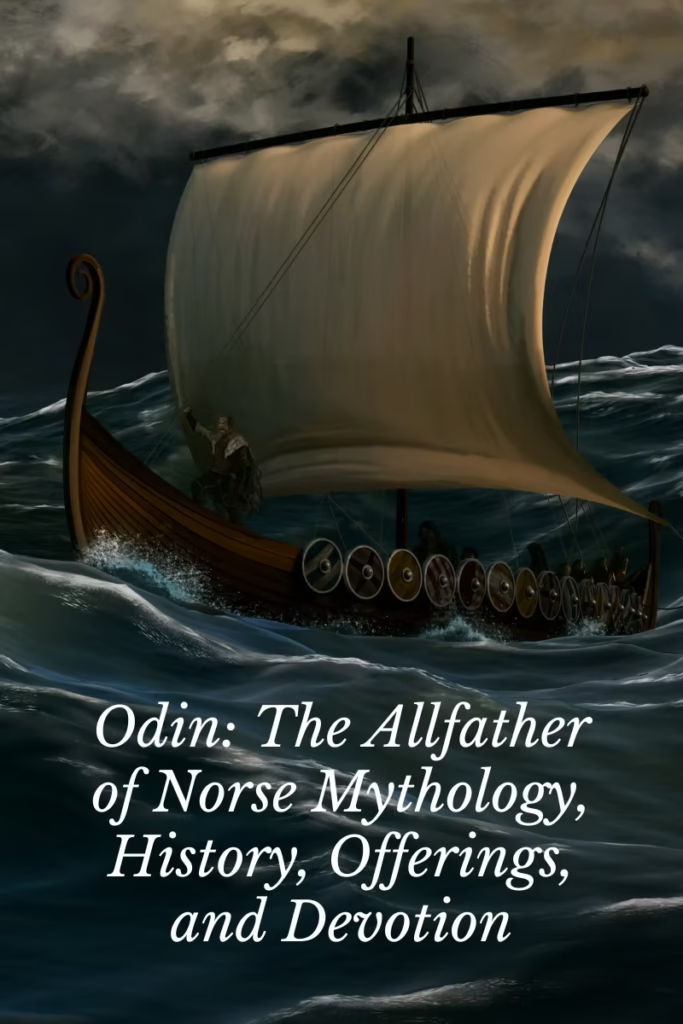
Odin, the enigmatic and powerful Allfather of Norse mythology, stands as one of the most complex deities in the ancient Germanic pantheon. Known by many names such as Allfather, the One-Eyed God, the Wanderer, and the God of Wisdom, War, and Magic, Odin has inspired awe, fear, and devotion for centuries. His presence weaves through the tapestry of ancient sagas, Eddic poetry, and rune lore, influencing modern paganism, literature, and spirituality.
In this comprehensive post, we’ll dive into Odin’s mythological origins, his symbols and associations, his role in the Norse cosmos, and how contemporary followers make offerings and connect with him in spiritual practice.
Who Is Odin?
Odin (Old Norse: Óðinn) is the chief god in the Aesir pantheon of Norse mythology. As a figure, he embodies many paradoxes. He is both a war god and a god of poetry, a master of wisdom and a trickster, a ruler and a wanderer. Unlike many deities who represent a clear archetype, Odin is multifaceted and mysterious.
He rules over Asgard, the realm of the Aesir gods, and presides over Valhalla, the hall where fallen warriors, known as the Einherjar, are taken by the Valkyries to await Ragnarök, the end of the world.
Odin in Mythology
Origins and Family
Odin is the son of Borr and the giantess Bestla. He has two brothers, Vili and Vé, with whom he helped create the world by slaying the primordial giant Ymir. From Ymir’s body, they fashioned the cosmos. His flesh became the earth, his blood the oceans, his bones the mountains, and his skull the sky.
Odin is married to Frigg, the goddess of prophecy and motherhood. Together they parent Baldr and Hodr. Odin is also the father of several other gods, including Thor with the Earth goddess Jörð, as well as Váli and Víðarr.
Odin’s Sacrifice for Wisdom
One of the most famous myths about Odin involves his relentless pursuit of knowledge. He sacrificed one of his eyes at Mímir’s well in order to drink its waters and gain immense wisdom. This act symbolizes the cost of enlightenment, a central theme in Odin’s mythology.
In another myth, Odin hangs himself from Yggdrasil, the World Tree, for nine days and nights, pierced by his own spear, in order to discover the runes. This shamanic ordeal reflects the theme of self-sacrifice for spiritual power, a practice echoed in modern initiatory traditions.
Roles and Domains
- Wisdom and Knowledge: He is often called the God of Wisdom. He seeks knowledge from all sources, including the dead, the runes, and even his adversaries. His relentless pursuit of truth, no matter the cost, marks him as a god of seekers, mystics, and magicians.
- War and Death: He is a war deity, but unlike Thor, who charges into battle, Odin is a strategist. He decides the fates of warriors, and his Valkyries collect the souls of the brave to bring them to Valhalla.
- Poetry and Magic (Seidr): He is a master of seidr, a form of Norse magic traditionally associated with women. His willingness to practice it shows his disregard for rigid gender roles in the pursuit of power. He is also a patron of skalds, having stolen the Mead of Poetry.
- The Dead and the Otherworld: He can commune with spirits and often seeks wisdom from the dead. He is a liminal figure who walks between worlds.
Symbols and Animals Associated with Odin
Odin’s imagery is rich and layered. He often appears as a gray-bearded wanderer cloaked in a wide-brimmed hat, traveling under various guises. His symbols and sacred animals include:
- Gungnir: His magical spear, which never misses its mark.
- Huginn and Muninn: His two ravens, whose names mean “thought” and “memory.” They fly across the world and report what they see.
- Sleipnir: An eight-legged horse, the fastest and most powerful of all steeds.
- Wolves: Geri and Freki, Odin’s two wolves, represent his feral, predatory aspect.
- The Valknut: A symbol of three interlocking triangles often associated with Odin. It represents death, the afterlife, and possibly the slain warriors of Valhalla.
- The Rune Alphabet: Odin discovered the runes through self-sacrifice and is thus their divine originator.
Odin’s Role in Ragnarök
In Norse mythology’s apocalyptic narrative, Odin leads the Aesir against the giants during Ragnarök, the twilight of the gods. Despite his wisdom and preparation, he knows he is fated to die in this final battle. He will be devoured by the wolf Fenrir, one of Loki’s monstrous offspring.
Odin’s death at Ragnarök symbolizes the ultimate sacrifice of the old order and the beginning of a new world. His fate reflects his deeper nature as a god who seeks transformation, even at great cost.
Worship of Odin in Ancient Times
In pre-Christian Scandinavia and Germanic Europe, Odin was widely venerated by warriors, kings, and poets. Archaeological evidence, including runestones, burial goods, and temple remains, suggests that Odin was among the most important deities in Norse religion.
Rituals often included:
- Animal Sacrifice: Horses, boars, and occasionally humans were sacrificed to him, particularly in times of war.
- Hanging Sacrifices: As a reflection of his own self-sacrifice, victims were sometimes hanged in a ritual practice known as blót.
- Sacred Groves and Temples: Sacred sites such as the temple at Uppsala in Sweden served as major cult centers for him and other gods.
Modern Devotion to Odin
Today, Odin is honored by followers of Ásatrú, Heathenry, and other Norse-inspired spiritual paths. While modern practice varies, it often includes a mix of historical reconstruction and contemporary mysticism.
Offerings
Modern practitioners offer Odin gifts that align with his domains:
- Mead or Ale: As the god who stole the Mead of Poetry, alcoholic beverages are common offerings.
- Tobacco or Incense: Particularly when invoking Odin in ritual or meditation.
- Runes: Writing runes in his honor or using them in divination.
- Animal Imagery: Statues or images of ravens, wolves, or horses.
- Sacrifices of Effort: Acts of study, poetry, writing, or spiritual discipline as offerings.
Odin values sincerity, sacrifice, and commitment to personal growth.
Connecting with Odin Spiritually
If you wish to build a relationship with Odin, here are some practices you can explore:
- Daily Meditation or Journaling: Reflect on his myths and how they apply to your life.
- Rune Study: Study the runic alphabet, especially the Elder Futhark, and ask for Odin’s guidance.
- Poetry and Writing: Compose poetry in his honor or reflect on your journey with him.
- Pathworking and Shamanic Journeys: Odin is a guide through the spirit worlds, making trance or dreamwork effective means of connection.
- Oaths and Commitments: Be mindful of promises made to Odin. He takes oaths seriously and expects integrity.
Warnings and Wisdom When Working with Odin
Odin is not a gentle or comforting deity. He demands commitment and is known for pushing his followers toward growth through trials. Working with him can bring intense experiences and life changes.
Approach him with:
- Respect: He is a god of wisdom and mystery. Arrogance will not serve you.
- Clear Intent: Be honest in your purpose. Odin values authenticity.
- Courage: He often guides through difficult challenges meant to build strength and insight.
Odin in Popular Culture
Odin’s influence extends into modern pop culture, where he continues to fascinate and inspire.
- Marvel Comics and Films: Odin appears as Thor’s father in the Marvel Cinematic Universe.
- Neil Gaiman’s American Gods: Odin appears as Mr. Wednesday, a conman who is much more than he seems.
- Video Games: Featured in titles such as God of War, Assassin’s Creed: Valhalla, and Age of Mythology.
These portrayals reflect his mysterious and powerful nature, bringing his mythos to a modern audience.
Final Thoughts: The Call of the Allfather
Odin is not a god for the faint-hearted. He is the seeker of truth, the wielder of runes, the master of sacrifice, and the god who walks between worlds. His path is one of depth, challenge, and transformation.
If you feel called by Odin, know that it is a path of mystery, power, and growth. He draws to him those who are willing to explore the unknown, question everything, and step into their full potential. In honoring him, you honor the eternal quest for wisdom.
Want to learn more about the Greek God Zeus? CLICK HERE!